Category: News

  • Vaping Linked to Higher Risk of Peptic Ulcers — New Study Warns

    PHOENIX — A cross-sectional analysis presented at the American College of Gastroenterology (ACG) 2025 meeting found that adults who use e-cigarettes had higher odds of peptic ulcer disease (PUD) than people who never vaped — and former e-cigarette users also showed increased risk.

    Albert E. Ohrin, MBChB, MHS, a first-year internal medicine resident at Ascension Saint Agnes Hospital in Baltimore, reported the findings. He said he was prompted to investigate after seeing Reddit posts from e-cigarette users reporting worsening PUD and because vaping remains common among young people.

    Study setup and prevalence
    Ohrin and colleagues analyzed data from 371,398 adults enrolled in the NIH All of Us Research Program. E-cigarette use was self-reported; PUD was identified using validated electronic health record diagnosis codes. Of the participants, 29,373 (8%) reported e-cigarette use — 21,277 current users and 8,096 former users. E-cigarette users were significantly younger (mean age 45.3 vs 59.3 years; P < .001), more likely to be female, and more likely to report lower education and income (P < .001). Background context: vaping remains common. The National Youth Tobacco Survey reported 1.6 million US middle and high school students (5.9%) vaped in 2024 (down from 7.7% in 2023). Among adults, CDC data show e-cigarette use rose to 6.5% in 2023 from 3.7% in 2020. Key findings - Current e-cigarette users had 27% higher odds of PUD compared with never-users (adjusted odds ratio [aOR], 1.27; 95% CI, 1.12–1.45). This was slightly higher than the association seen with traditional combustible cigarettes in the study (aOR, 1.19). - Former e-cigarette users had 13% higher odds of PUD (aOR, 1.13; 95% CI, 1.04–1.24) compared with never-users. - Any e-cigarette use was associated with increased odds of PUD (aOR, 1.17; 95% CI, 1.09–1.26). For context, use of nonsteroidal anti-inflammatory drugs (aOR, 2.15) and a diagnosis of gastroesophageal reflux disease (aOR, 4.45) were the strongest risk factors for PUD in the analysis. Limitations and next steps Ohrin noted surprise that former users still showed higher odds of PUD, but emphasized the study could not assess frequency of vaping or how long participants had quit. “Now that we know there’s an association, we are going to do more studies on e-cigarettes” to better define potential gastrointestinal harms, he told Medscape. He added that determining whether a dose–response relationship exists would require prospective trials. Expert perspective Laura Crotty Alexander, MD, a pulmonology and critical care researcher at UC San Diego who has studied e-cigarette health effects for a decade, called the finding novel and important. She noted prior work showing nicotine can increase gastric acid production and impair healing, and that with combustible cigarettes other toxic smoke constituents also contribute to PUD risk. Her own in vitro and mouse studies indicate e-cigarette aerosols can be irritants and cause oxidative stress — mechanisms that could plausibly affect the gastrointestinal tract. Crotty Alexander said the study “opens a door” to examining vaping’s effects on the GI system and reminded clinicians to include vaping when taking inhalant histories. Disclosures Ohrin and Crotty Alexander reported no conflicts. Reporting by Alicia Ault, freelance journalist, Saint Petersburg, Florida. She can be found on X @aliciaault and on Bluesky @aliciaault.bsky.social.

  • Juul Scores Major Win: UK Court Grants Permanent IP Injunction

    The UK High Court has granted Juul Labs a permanent intellectual property injunction, turning temporary protections put in place in 2019 into lasting legal safeguards. The order bars four Chinese companies — Greensun Technology, Ouch, Gaish, and Airsmo Tech — from infringing Juul’s trademarks, product designs, and patents.

    The court found the defendants had ignored the proceedings and earlier orders, failing to respond to Juul or submit the required witness statements. The ruling requires the destruction of existing infringing products and compels the companies to publish the judgment on their websites.

    Juul described the injunction as a key milestone in its global IP enforcement efforts, saying it helps ensure the company’s products and designs remain protected in the UK market and reinforces its rights against unauthorized competitors.

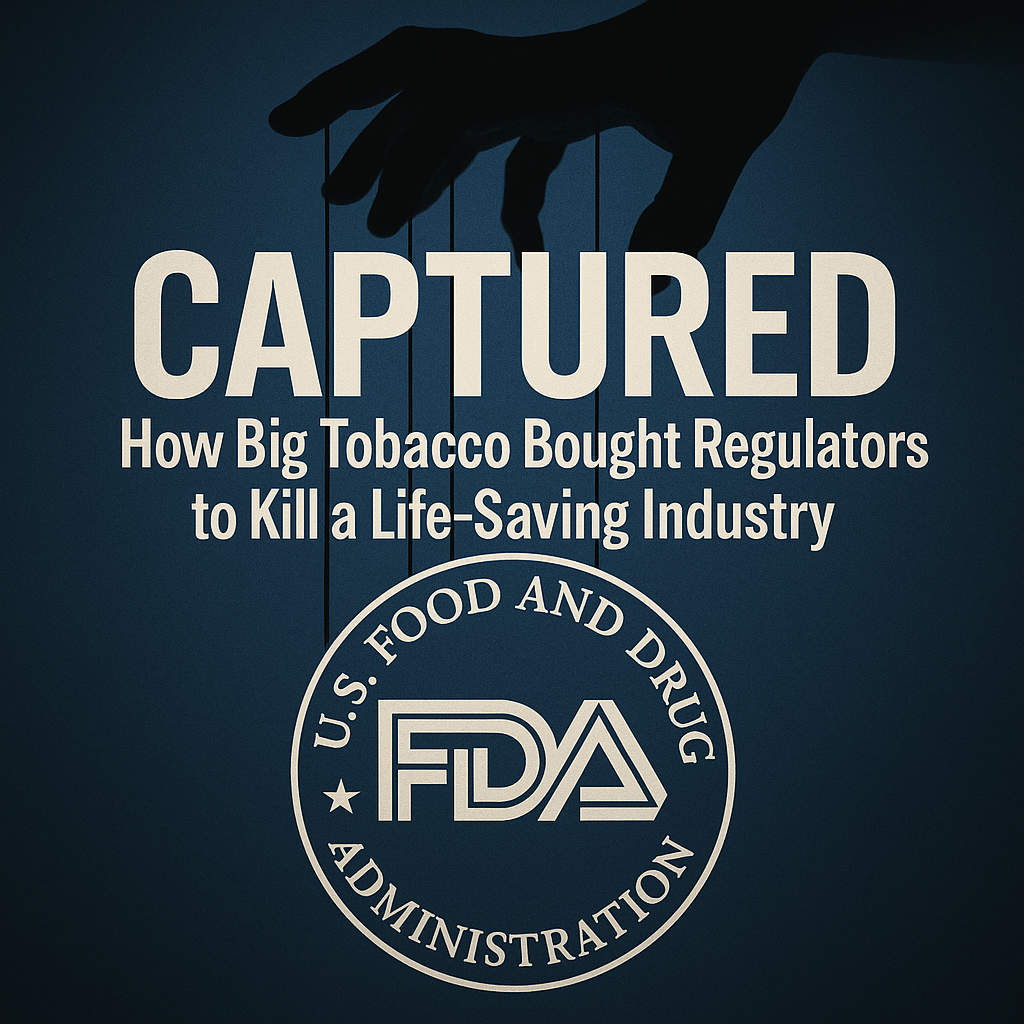
  • Captured: How Big Tobacco Bought Regulators to Kill A Life-Saving Industry

    Captured: How Big Tobacco Bought Regulators to Kill A Life-Saving Industry

    What you’re about to read is the result of a comprehensive investigation into one of the most brazen cases of regulatory capture in modern American history. Following the money, the careers, and the body count reveals a system where the agency tasked with protecting public health is entirely funded by the industry killing 480,000 Americans per year—and actively working to eliminate safer alternatives.

    The evidence is documented. The conflicts are undeniable. And the stakes couldn’t be higher.

    The Body Count

    Cigarette smoking causes more than 480,000 deaths per year in the United States. E-cigarettes are “around 95% safer than smoked tobacco and they can help smokers to quit” [2d]. The FDA acknowledges on its own website that e-cigarettes are “generally a lower-risk alternative for cigarettes” [2e].

    Yet under the current regulatory regime, “it is easier to introduce a new cigarette to the market than an e-cigarette, nicotine pouch, or heated tobacco product, all of which the agency acknowledges are safer alternatives to smoking” [6f].

    This isn’t bureaucratic dysfunction. It’s not excessive caution. It’s murder by red tape—and the bodies are piling up while the profits flow in the other direction.

    The Existential Threat

    Follow the money, and the motive becomes crystal clear.

    British American Tobacco wrote down $31.5 billion from the value of its U.S. cigarette brands, openly acknowledging that cigarettes have “no long-term future” [3c]. Altria’s CEO admitted that vapor products are “clearly the winner in the marketplace” [3a], while warning the company may not meet its 2028 sales goals “because of competition from disposable vapes” [3b].

    The data confirms their worst nightmare: e-cigarettes contribute “to the decline in national cigarette consumption” [3d]. Every person who switches from smoking to vaping is a customer Big Tobacco loses. Forever.

    This is an extinction-level event for their business model. And they will do anything—pay anyone, capture any agency, write any law—to survive.

    The Funding Mechanism

    The FDA’s Center for Tobacco Products operates on a funding model that would make any ethics watchdog blanch: it is “fully funded” by Big Tobacco [5a]. Not partially funded. Not subsidized. Entirely funded by the very industry selling combustible cigarettes—fees collected from traditional tobacco companies rather than e-cigarette manufacturers [5b].

    Read that again. The agency tasked with regulating tobacco products is paid exclusively by the companies that profit from cigarette sales.

    This creates a perverse incentive to restrict safer e-cigarette alternatives while preserving the market for the combustible cigarettes that actually fund the agency’s operations [5b]. Every time someone switches from cigarettes to vaping, the FDA’s budget takes a hit.

    The conflict of interest isn’t theoretical. It’s structural. It’s baked into the balance sheet.

    The Revolving Door

    Matthew Holman spent years as Director of the Office of Science at FDA’s Center for Tobacco Products. He knew the agency’s inner workings, its standards, its pressure points. Then, suddenly, he quit [5c].

    His new employer? Philip Morris.

    Before leaving, Holman had overseen approval of Philip Morris’s IQOS heated tobacco product as a “modified risk” device—despite evidence showing it “contained toxins… at higher levels than in combustible cigarettes” [5c]. Mission accomplished, presumably.

    He wasn’t alone. Roxana Weil, former Lead Toxicologist at FDA CTP, joined Altria’s Juul just as the company faced regulatory scrutiny [5d]. Perham Gorji, a senior FDA tobacco lawyer who worked on menthol regulations, left the agency and immediately joined DLA Piper—Philip Morris’s law firm [5e]. The FDA later withdrew its proposed menthol ban [5g].

    The pattern is unmistakable: FDA officials shape tobacco policy, then cash out to represent the industry they were regulating. They know where the bodies are buried because they helped dig the graves.

    The State-by-State Play

    Unable to stop vaping’s rise through federal action alone, Big Tobacco went local—and they stopped pretending to hide it.

    Altria openly lobbied for vape registry laws in Kentucky and “worked with legislatures in a number of states” to ban flavored vapor products [4a]. “At least two of these manufacturers – Altria and R.J. Reynolds – have been actively lobbying legislators in various states to adopt such laws and some 10 other states have enacted similar measures” [4b].

    But Wyoming’s SF0107 hearing on March 4, 2024, exposed just how brazenly the fix was in [4d].

    Chairman Olsen opened by limiting public testimony to one minute per person, alternating strictly between supporters and opponents. Then Representative Landon Brown—the bill’s primary sponsor and Chairman of the Wyoming Joint Education Committee—took the floor to introduce his own legislation.

    And immediately handed the microphone to Altria.

    Not to one lobbyist. To two. David Picard, a registered Altria lobbyist, and David Sylvia, Altria’s Senior Director of Public Policy, presented the vape registry bill while the elected official who sponsored it watched [4d]. Under Chairman Olsen’s alternating-speaker rule, those two industry presentations consumed the speaking time that would have gone to two citizens opposing the bill.

    A state legislator literally ceded his constitutional authority to corporate lobbyists, who then used procedural rules to silence opposition.

    The Public Health Law Center saw through the charade: “Big Tobacco has profit-driven incentives behind their [lobbying efforts]: the registry laws keep competitors out of the marketplace” [4c].

    Read that again. The companies selling cigarettes are lobbying to restrict access to the products that help people quit cigarettes. And elected officials are letting tobacco executives write and present the laws under their own names.

    The Rigged Approval Process

    The federal execution of this strategy was even more surgical.

    Nearly 26 million e-cigarette products were submitted to the FDA’s Premarket Tobacco Application process [6b]. How many were approved?

    Thirty-nine [6c].

    All owned by Big Tobacco companies [6c].

    The FDA “failed to design a uniform application process,” by its own admission [6a]. In August 2021, the agency suddenly announced it would deny about 55,000 applications for flavored products and demand robust studies—like randomized control trials—that it had never previously required [6d]. When smaller manufacturers asked for time to conduct these surprise studies, the FDA refused and denied their applications [6d].

    Meanwhile, NJOY’s lawsuit revealed that the FDA denied the company’s flavored e-cigarettes despite the agency’s own internal reviews—revealed through FOIA—confirming NJOY “adequately addressed youth concerns and showed superior smoking cessation rates” [6e].

    The U.S. Office of Special Counsel investigated the FDA’s tobacco review process and found the agency “relaxed its standards of review for certain tobacco products and stifled attempts by its scientists to raise concerns” [5h].

    Scientists were silenced. Standards were bent. And always in the same direction—toward Big Tobacco products and away from their competitors.

    The FDA allowed Philip Morris to market IQOS with “reduced-exposure” claims despite evidence showing increased exposure to other toxins [5i]. The FDA’s advisory committee concluded that “removal of menthol would benefit public health” [5f]—giving the agency exactly what it needed to ban menthol cigarettes. They sat on that information for 10 years before actually proposing a rule, then withdrew the proposal earlier this year [5g].

    The Truth About Bans

    When Massachusetts and California restricted flavored vaping products, researchers documented what happened next—and it was exactly what you’d expect when you take away a safer alternative.

    Flavor restrictions “increased cigarette use among youths and young adults” [7a]. E-cigarette flavor restrictions in place for a year or longer yielded “20% increases in sales of cigarette brands disproportionately used by underage smokers” [7c].

    A 2015 study found that “reducing e-cigarette access increases smoking among 12 to 17 year olds” [7d]. Participants in a 2021 study were “more likely to purchase from the [illegal market] when product availability in the [legal market] was more restricted, with e-cigarette users being most affected” [7b].

    The policy intended to protect youth instead pushed them toward deadlier products—both legal cigarettes and black market vapes. The “for the children” rhetoric produced child smokers.

    The Manufactured Youth Crisis

    The entire regulatory crackdown hinges on claims of epidemic youth vaping. There’s just one problem: youth e-cigarette use just dropped to its lowest level in a decade [1a].

    Usage decreased from 2.13 million youth in 2023 to 1.63 million in 2024 [1a]—a dramatic 23% decline. Youth vaping peaked in 2019 at 20.1% [1c]. Today it sits at 5.9% [1a].

    Meanwhile, 17% of high school students used marijuana in the past 30 days [1e], and 11.2% of adolescents aged 12-17 use marijuana [1d]. Youth marijuana use is nearly three times higher than vaping.

    Yet there’s no federal panic about cannabis. No billion-dollar enforcement campaign. Many states have legalized it—and the federal government does nothing, despite marijuana remaining federally illegal. In legal states, dispensaries require ID checks, security guards, and controlled-access back rooms. Actual restrictions that work.

    Compare that to vaping products sold at gas stations.

    If youth protection were the priority, why does the product with three times the youth usage get state flexibility while the safer product faces federal annihilation?

    Because there’s no Big Marijuana company funding a regulatory agency. No revolving door. No captured budget.

    And here’s the kicker: among adolescents who do vape, 66% use e-cigarettes without nicotine [1b]. Two-thirds of youth vapers aren’t even using nicotine.

    The youth crisis was manufactured to justify regulatory capture. The comparison to marijuana exposes the lie.

    The Verdict

    This isn’t incompetence. It’s not bureaucratic dysfunction. It’s not excessive caution in the face of uncertainty.

    It’s regulatory capture, pure and simple.

    An agency funded entirely by cigarette companies has:

    • Approved only Big Tobacco vaping products [6c]
    • Denied hundreds of thousands of applications from competitors [6b]
    • Changed approval standards mid-process to deny smaller manufacturers [6d]
    • Employed officials who then went to work for the industry [5c][5d][5e]
    • Ignored its own scientists’ concerns [5h]
    • Pushed policies that increase youth smoking [7a][7c][7d]
    • Dismissed evidence that vaping is 95% safer than smoking [2d]

    All while cigarette companies openly lobby for vaping restrictions [4a][4b] and acknowledge their own products have “no long-term future” [3c].

    The science is clear: “E-cigarette consumption is less toxic than tobacco smoking” [2a]. “E-cigarettes exhibit reduced exposure to harmful toxins compared to traditional cigarettes” [2b]. Long-term e-cigarette use shows “substantially reduced levels of measured carcinogens and toxins relative to smoking only combustible cigarettes” [2c].

    If vaping is 95% safer and helps smokers quit, restricting access to vaping products isn’t protecting public health.

    It’s protecting cigarette sales.

    And the body count speaks for itself.

    Sources

    1. Youth Smoking / Vaping / Marijuana Trends

    1. Youth e-cigarette use drops to lowest level in a decade
      1. FDA (2025), press announcement
        1. “Decrease from 2.13 million (7.7%) youth in 2023 to 1.63 million (5.9%) youth in 2024.”
    2. Adolescents’ Use of Nicotine-Free and Nicotine E-Cigarettes: A Longitudinal Study
      1. Tokle et al. (2021), PMC8842395
        1. “Among adolescents reporting vaping… 66% had used e-cigarettes without nicotine.”
    3. Tobacco Product Use and Associated Factors Among Middle and High School Students — United States, 2019
      1. Wang et al. (2019), CDC MMWR
        1. Youth tobacco product use peaked in 2019 at 20.1%.
    4. Highlights for the 2023 National Survey on Drug Use and Health
      1. SAMHSA (2023), NSDUH highlights (PDF)
        1. 11.2% of adolescents aged 12–17 used marijuana (past year).
    5. Youth Risk Behavior Survey (YRBS)
      1. CDC (2023), 2023 Data Summary & Trends
        1. “In 2023, 17% of high school students used marijuana during the past 30 days.”

    2. Harm Reduction and Toxicology Evidence

    1. An updated overview of e-cigarette impact on human health
      1. Marques et al. (2021), Respiratory Research
        1. “E-cigarette consumption is less toxic than tobacco smoking.”
    2. Comparative systematic review on the safety of e-cigarettes and conventional cigarettes
      1. Yayan et al. (2024), PubMed
        1. Reduced exposure to harmful toxins compared with smoking.
    3. Nicotine, Carcinogen, and Toxin Exposure in Long-Term E-Cigarette and NRT Users
      1. Shahab et al. (2017), Annals of Internal Medicine
        1. Substantially reduced carcinogens and toxins vs smokers.
    4. E-cigarettes: an evidence update
      1. United Kingdom (2015), Public Health England
        1. “E-cigarettes are around 95% safer than smoked tobacco and they can help smokers to quit.”
    5. E-Cigarettes, Vapes, and other ENDS
      1. FDA (2025), ENDS overview
        1. E-cigarettes are generally a lower-risk alternative to cigarettes.

    3. Big Tobacco Market Threat / Economic Motive

    1. Earnings call transcript: Altria Q4 2024
      1. Investing.com (2025), Transcript
        1. “Vapor products are clearly the winner.” — Altria CEO.
    2. Altria “smoke-free” targets under threat from illicit vapes
      1. Reuters (2025), Report
    3. BAT writes down $31.5B on U.S. cigarette brands
      1. Reuters (2023), Report
        1. Company says cigarettes have “no long-term future.”
    4. Sales of ENDS and Cigarette Sales in the USA: A Trend Break Analysis
      1. Selya et al. (2023), Open access
        1. ENDS contribute to decline in national cigarette consumption.

    4. State-Level Lobbying / Vape Registry Laws / Model Authorship

    1. New restrictions on vape sales in Kentucky win approval with tobacco-industry backing
      1. Kentucky Lantern (2024), Article
        1. Altria lobbied for a vape registry in Kentucky.
        2. Altria worked with legislatures in multiple states to ban flavored vapor products.
    2. Vapes, Big Tobacco and a new Mississippi registry law
      1. Magnolia Tribune (2025), Article
        1. Altria and RJR actively lobbying; ~10 other states enacted similar measures.
    3. State E-Cigarette Registry Bills and What to Make of Them
      1. Public Health Law Center (2024), Commentary
        1. “Registry laws keep competitors out of the marketplace.”
    4. Wyoming Legislature — SF0107 Committee Video
      1. House Corporations, Elections & Political Subdivisions (Mar 4, 2024), video

    5. FDA-Industry Collusion / Revolving Door Evidence

    1. The Food and Drug Administration Is Not Positioned to Deter Adolescent E-Cigarette Use
      1. Rodu (2020), Open access
        1. CTP “fully funded” by Big Tobacco.
    2. FDA should re-examine incentives to collect tobacco user fees fairly
      1. American Consumer Institute (2023), Report
        1. Funding structure creates perverse incentives that disadvantage ENDS.
    3. A top FDA tobacco expert suddenly quits — to work for Big Tobacco
      1. JD Supra (2022), Article
        1. Matthew Holman, former CTP Office of Science Director, joined PMI; IQOS got reduced-exposure order despite toxin issues.
    4. Juul bulks up its science staff as FDA vaping deadline nears
      1. Los Angeles Times (2020), Article
        1. Former FDA toxicologist joined JUUL.
    5. Former FDA lawyers join tobacco industry in ‘epic’ fight against the agency
      1. The Examination (2024), Investigation
    6. TPSAC gave the FDA what it needs to ban menthol
      1. UCSF (2011), Post
    7. Proposed Menthol Rules Withdrawn: Litigation Continues
      1. Public Health Law Center (2025), Update
    8. Unclear Standards for Scientific Review and Stifling of Scientific Dissent…
      1. U.S. Office of Special Counsel (2022), Statement
    9. FDA’s reduced exposure marketing order for IQOS: why it is not a reliable global model
      1. Lempert et al. (2021), PubMed

    6. FDA Failings

    1. Update on the FDA Premarket Review Process
      1. Public Health Law Center (2021), Commentary
        1. FDA failed to design a uniform application process.
    2. FDA makes determinations on more than 99% of 26M tobacco products
      1. FDA (2023), CTP Newsroom
    3. ENDS authorized by the FDA
      1. FDA (2025), Authorized ENDS list
        1. Only 39 authorized; all owned by Big Tobacco.
    4. FDA v. Wages and White Lion Investments, L.L.C. (White Lion)
      1. Cornell LII (2025), Docket
        1. Aug 26, 2021: FDA denied ~55,000 flavored PMTAs; demanded RCT-level evidence without prior consistent guidance; later denied White Lion’s request to conduct studies.
    5. NJOY sues FDA over delayed ruling on flavored disposable vapes
      1. Complaint (2025), PDF
    6. Hearing wrap-up: FDA must eliminate red tape…
      1. U.S. House Oversight Committee (2025), Release
        1. “It is easier to introduce a new cigarette than an e-cigarette or nicotine pouch.”

    7. Smoking Increases Caused by Flavor Bans

    1. State E-Cigarette Flavor Restrictions and Tobacco Product Use in Youths and Adults
      1. Cheng et al. (2025), JAMA Network Open
        1. “Flavor [restrictions]… increased cigarette use among youths and young adults.”
    2. The Illegal Experimental Tobacco Marketplace I: Effects of Vaping Product Bans
      1. Freitas-Lemos et al. (2021), Open access
        1. Participants more likely to purchase from the illegal market when the legal market was more restricted; e-cig users most affected.
    3. Tobacco purchases rise following restrictions on e-cigarette sales
      1. Yale School of Public Health (2023), News
        1. Flavor restrictions ≥1 year yielded ~20% increases in cigarette sales in brands disproportionately used by underage smokers.
    4. How does electronic cigarette access affect adolescent smoking?
      1. Friedman (2015), Health Economics
        1. “Reducing e-cigarette access increases smoking among 12 to 17 year olds.”
  • Top 5 Best Vape Shop Wholesalers in the U.S.

    Top 5 Best Vape Shop Wholesalers in the U.S.

    Finding a reliable vape shop wholesaler is crucial for anyone running (or planning to open) a vape or smoke shop. The right distributor will keep your shelves stocked with popular products, offer competitive pricing, and provide dependable service. In this post, we countdown the top five U.S.-based vape wholesalers – from #5 to #1 – known for their extensive catalogs, fast shipping, and industry expertise. This listicle is presented in reverse order, saving the best for last, and is tailored to help vape shop owners discover the ideal wholesale partners for their business needs.

    5. Beast Distribution (VaporBeast.com)

    Overview: Beast Distribution – formerly known as VaporBeast – has earned a strong reputation as a one-stop wholesale supplier for vape shops. Founded in California and now part of a major industry parent company, Beast Distribution serves thousands of retailers nationwide. It’s often praised as a “trusted online source for the latest in smoke-free technology” and offers a mix of e-cigarette gear and smoke shop essentials under one roof.

    Why Choose Beast Distribution:

    • No Minimum Order & Flexible Shipping: The “Beast Advantage” includes no minimum order quantity and same-day shipping for orders, with multiple delivery speed options (1-day, 2-day, and ground). This means whether you need a small restock or a large inventory load, Beast can accommodate your order size and get it to you fast.
    • Wide Product Selection: Beast carries a huge assortment of products – from vape devices and e-liquids to delta-8 THC items, nicotine pouches, and traditional smoke shop supplies. Their expanded catalog makes it easy to “fill in” any inventory gaps, whether it’s the latest sub-ohm kit or ancillary products like grinders and rolling papers.
    • Trusted by Retailers: VaporBeast’s wholesale business has been thriving for years; as of 2016 it was serving over 4,700 retail stores, primarily vape shops. Such a track record illustrates Beast Distribution’s reliability and trustworthiness as a vendor. Many shop owners laud its customer service and the convenience of having a dependable supplier that can scale with their business growth.

    (Beast Distribution secures the #5 spot for its flexible ordering policies and strong industry reputation. It’s especially ideal for new shop owners or small businesses that appreciate no MOQ and speedy fulfillment.)

    4. Smokeetown Wholesale (Smokeetown.com)

    Overview: Smokeetown Wholesale (based in Dallas, Texas) brands itself as a premiere source for not just vaping products but also smoke, hemp, and dispensary supplies. Operating a large warehouse in Dallas, Smokeetown has become a regional hub for vape shops and convenience stores looking for a bit of everything. They combine the product range of a big distributor with the personalized service of a local business, and even offer a dedicated mobile app for easy ordering.

    Highlights of Smokeetown Wholesale:

    • Extensive Product Variety: Smokeetown offers a comprehensive range of inventory covering disposable vapes, e-juices, hemp-derived products (CBD and Delta-8), traditional tobacco products, kratom, and even mushroom essentials. In short, it’s a “one-stop shop” for all things nicotine and alternative smokeables – from vape mods and pods to Delta-8 gummies and hookah tobacco. This breadth of selection allows retailers to source everything from vaping devices to emerging wellness products in one place. (The company’s Linktree proudly calls it a “Top Source for Vape, Hemp, Kratom, & Tobacco”, which speaks to this diversity.)
    • Fast Order Processing: Retailers often praise Smokeetown’s speedy fulfillment. Orders received by 4:00 PM CST ship out the same business day, which helps shops replenish inventory quickly. This commitment to quick processing means less downtime waiting for stock.
    • Customer Service and Regional Advantage: Being a Dallas-based wholesaler, Smokeetown is geographically well-positioned to ship throughout the U.S. (especially convenient for Central and Southern states). They emphasize “exceptional customer service” in their messaging, aiming to build relationships with their clients. As a result, many local retailers consider Smokeetown a trusted partner that offers personal support, whether it’s helping pick the right product mix or resolving any order issues promptly.
    • Tech-Savvy Convenience: Smokeetown even provides a mobile app for iOS and Android, reflecting a modern, convenient approach to wholesale ordering. This makes browsing products, checking stock, and placing orders extremely accessible – a bonus for busy store owners who can manage reorders on the go.

    (Smokeetown Wholesale ranks #4 for its impressive product range and customer-focused approach. It’s an excellent choice if you want a wholesaler that covers every category – vape, smoke, hemp, etc. – all under one roof, with a personal touch.)

    3. HS Wholesale (HSWSupply.com)

    Overview: HS Wholesale is a heavyweight in the industry – a national distributor headquartered in Addison, Illinois (near Chicago). If you’re looking for scale and selection, HS Wholesale delivers in spades. Billed as the “#1 National JUUL, Vuse and Smoke Shop Distributor”, this company supplies an astonishing number of businesses across the country. HS Wholesale has become a go-to source for chain retailers and independent shops alike, thanks to its vast catalog that spans both vaping and traditional smoking products.

    Key Strengths of HS Wholesale:

    • Massive Scale and Selection: HS Wholesale isn’t just large – it’s one of the largest in the USA. The company proudly notes that it serves around 250,000 stores, chains, and vape/smoke shops nationwide. This broad reach is supported by a huge inventory: shop owners can find everything from the latest vape pod systems and e-liquids to glass pipes, rolling papers, and even convenience-store items. In fact, HS carries thousands of products across categories – they stock major vape brands (think SMOK, GeekVape, Vaporesso), popular e-juice lines, disposables, nicotine pouches (e.g. ZYN), as well as cigarettes, cigars, and alternative cannabinoids (Delta-8, Delta-10, HHC, etc.). It’s truly a one-stop wholesaler for all smoke shop needs.
    • Official Distributor for Top Brands: One factor that sets HS Wholesale apart is its status as an authorized master distributor for big-name brands. They are a leading distributor of JUUL and Vuse products in the US, among others. For a vape shop, this means you can source authentic, manufacturer-approved products (pods, devices, refills) directly from HS, often with exclusive deals or bundles. This assurance of authenticity and supply is critical, especially for regulated products like pod systems.
    • Competitive Pricing & Deals: Due to its volume and manufacturer relationships, HS Wholesale offers very competitive wholesale pricing. Retailers often report that HS gives access to bulk discounts and frequent deals (for example, seasonal promotions or clearance sales on overstock). Their buying power essentially becomes your cost advantage. Coupled with that, HS has a dropship program and “pre-order” system for new releases, ensuring you can get hot new products as soon as they’re available.
    • Robust Logistics and Support: With large distribution centers (and multiple shipping hubs), HS Wholesale provides fast shipping nationwide, with many orders leaving their warehouse within 24 hours. They understand the B2B needs well – offering features like a dedicated account manager for big clients, an easy online ordering portal, and compliance support (important for PACT Act and tax compliance when shipping tobacco/vape products). The company’s sheer size also means they have inventory depth – reducing the chance of items being out-of-stock.
    • Trust and Industry Presence: HS Wholesale’s scale and longevity have made it a well-known name in the industry. Many vape and smoke shop owners see HS as a reliable backbone supplier to keep their stores fully stocked. Whether you operate a single local shop or a multi-state retail chain, HS Wholesale has the capacity to supply your needs efficiently.

    (HS Wholesale lands at #3 for its unmatched scale and comprehensive catalog. If you prioritize getting everything in one place and at great prices – and especially if you need official distribution for top brands – HS Wholesale is a top-tier choice.)

    2. Got Vape Wholesale (GotVapeWholesale.com)

    Overview: Got Vape is a veteran in the vapor industry, bringing over 22 years of experience to the table. Founded back in 2001, Got Vape started as one of the first online retailers of vaporizers and has since evolved into a leading wholesale vape distributor. Based in Southern California, the company leverages decades of product knowledge and industry connections to benefit today’s smoke shop owners. Got Vape Wholesale prides itself on being both conversational and authoritative – they understand the trends and can guide retailers in stocking the right products, all while maintaining competitive pricing.

    Why Got Vape Wholesale Stands Out:

    • Decades of Expertise: In an industry as young and fast-changing as vaping, Got Vape’s 20+ year history is a huge asset. Established in 2001, they have weathered all the industry’s evolutions – from early herbal vaporizers to the e-cig boom, and now the era of pods and disposables. This longevity translates into deep expertise. “Got Vape has been in the game since 2001 with 22 years of experience”, and that know-how is reflected in their team of account executives who can offer knowledgeable advice to retailers. In short, you’re dealing with folks who truly know the products and the market.
    • Extensive and Diverse Catalog: Got Vape offers an expansive product catalog that runs the gamut of smoke shop inventory. According to their company info, they provide “a wide range of high-quality and profitable products at competitive prices”. This includes vaporizers of all kinds (cartridge batteries, dry herb vapes, wax pens, e-nails), disposable vapes, e-liquids, CBD products, glass and silicone pipes, and tons of accessories (grinders, trays, replacement parts, etc.). They even carry fringe categories like detoxifiers, novelty collectibles, and smoke shop apparel – meaning a retailer can source trendy items that go beyond just vapes. Got Vape also partners with leading brands (Puffco, Yocan, PAX, Wulf Mods, and more) to ensure authentic products and some exclusive offerings.
    • Quality and Authenticity Focus: With its roots in the “vaporizer health” movement, Got Vape emphasizes authentic, high-quality merchandise. They stay ahead of industry trends to stock the latest innovations, but also vet products for quality. As they state, “our inventory is stocked with high-quality and authentic items… meeting the diverse needs of your business and customers”. Retailers working with Got Vape can feel confident they’re getting legit devices (no knock-offs) and top-tier brands – which in turn keeps end-customers happy and coming back.
    • Dedicated Support and Resources: Despite being a large distributor, Got Vape takes a personalized approach to customer service. Each wholesale client often gets a dedicated sales representative, and the team is known to be friendly and helpful – ready to answer questions about products or give guidance on what’s selling well (they even run a smoke shop business blog with tips). The ordering process is user-friendly, and they highlight reliable distribution partnerships that ensure quick deliveries and well-packed shipments. Essentially, they aim to be a growth partner: “Empower Your Smoke Shop” is a motto, meaning they succeed when you succeed.
    • Industry Credibility: Got Vape has a certain prestige from being an early leader. They’ve been referred to as “the premier vaporizer retail site in the world with a nationwide wholesale chain”. While that’s a bold claim, it underscores their influence. Many established smoke shops have likely done business with Got Vape at some point. If you’re looking for a wholesaler with a proven track record and deep industry roots, this is it.

    (Got Vape Wholesale comes in at #2 due to its unique blend of experience, huge product selection, and knowledgeable service. They are especially great for retailers who want a partner to navigate the fast-changing vape landscape – from new tech gadgets to the latest CBD trends – with an assurance of quality and authenticity.)

    1. Empire Imports (EIVape.com)

    Overview: Empire Imports claims the #1 spot on our list, and for good reason. Established in 2009 in Southern California, Empire Imports has grown into a powerhouse wholesaler specializing in vape juice, hardware, and accessories. With over 15 years in business, Empire combines the best aspects of the other four contenders – a vast selection, competitive pricing, reliability, and no-nonsense service – into one package. They are a true vape specialist wholesaler, focused on delivering everything a vape shop might need, from the most popular e-liquid brands to the latest devices and coils.

    Top Reasons Empire Imports is #1:

    • Longevity and Industry Focus: Being in the vape wholesale game for a decade and a half, Empire Imports has solidified its reputation as an industry leader. The company’s profile notes it is “a vape wholesaler based in Southern California, established in 2009, specializing in e-juice, hardware, and vape accessories”. Unlike some distributors that also carry general smoke shop items, Empire’s core focus is vaping products – which means they excel in that domain. This specialization allows them to curate one of the best selections of vaping hardware and liquids in the market and stay ahead on vape trends (while still offering some related categories like smoke shop glassware and pouches for convenience).
    • Extensive Catalog of Top Brands: Empire Imports’ catalog reads like a who’s who of the vaping world. They carry hundreds of popular brands and product lines – from major device manufacturers (SMOK, GeekVape, Voopoo, Uwell, etc.) to famous e-liquid brands and disposable vape makers. For instance, on the disposables side, Empire supplies many of “the industry’s most sought-after brands including Puff, Ezzy, Ryse, Fuze, Hitt, and more”eivape.com. They have entire sections for new arrivals and even a “Coming Soon” pageeivape.com, indicating that if there’s a hot new product about to hit the market, Empire will likely have it available for you to stock. This breadth and freshness of inventory make Empire a preferred source when you want the latest and greatest on your shelves.
    • No Minimum Order & Retailer-Friendly Terms: Empire Imports understands the needs of vape shop owners large and small. They maintain a no MOQ (no minimum order quantity) policy (as noted on their social profiles), so you can place orders of any size. Whether you need just a few units of a new flavor to test in your store or a bulk order of coils, Empire won’t restrict you. This flexibility is great for managing cash flow and inventory levels – you order what you need, when you need it. Additionally, Empire is known for fair pricing (often at or below standard wholesale rates) and occasional bulk deals, which helps maximize your margins.
    • Fast, Reliable Fulfillment: With a warehouse in Ontario, CA (a logistics hub), Empire Imports can ship quickly across the country. West Coast shops often get very speedy delivery, and even East Coast retailers report prompt arrivals. Empire’s operation is set up for B2B efficiency: orders are typically processed rapidly, and they have a solid track record of accurate fulfillment (correct items, proper packaging, etc.). They also provide all the necessary support for PACT Act-compliant shipping for vape products, making the process worry-free. In essence, Empire is a wholesaler you can count on to keep your store stocked without delays or hassles.
    • All-Around Top Performer: Empire Imports earned the top spot on this list because it delivers across all key factors: a huge and up-to-date selection, great prices, flexible ordering, and dependable service. Many shop owners cite Empire as their primary supplier for e-liquids especially, due to the sheer variety of flavors and brands available. Moreover, Empire’s customer service is responsive and the company culture is about building long-term relationships – they want to be your go-to vendor, not just a one-time sale. This all-around excellence in product and service makes Empire Imports our #1 pick for vape shop wholesalers in the U.S.

    (Empire Imports tops our list as the best overall vape wholesaler. For any retailer looking for a comprehensive, hassle-free wholesale experience with a focus on quality vape products, Empire Imports is hard to beat.)

    Conclusion

    Choosing the right wholesale partner can make a tremendous difference in the success of your vape or smoke shop. The five wholesalers profiled above are among the best in the U.S., each excelling in different ways:

    • Beast Distribution offers flexibility and speed for shops that value no minimums and quick restockstpe.beastdistro.com.
    • Smokeetown Wholesale provides broad product diversity and a personal touch, great for stores seeking a one-stop source for both traditional and novel products.
    • HS Wholesale brings massive scale, inventory breadth, and official brand partnerships – perfect for high-volume retailers and those needing a very wide range of items.
    • Got Vape Wholesale delivers deep expertise and a curated yet expansive catalog, ideal for shops that want guidance on the latest and greatest in vaping backed by decades of know-how.
    • Empire Imports combines many of these strengths into one, making it our top recommendation for an all-around superior wholesaler.

    Before committing, consider factors like your store’s location, the product categories you focus on, and the kind of relationship you value (whether it’s hands-off ordering or having a rep you can call). In fact, savvy shop owners often work with multiple wholesalers – for example, using one as a primary source and others to supplement or backfill stock when needed. All the distributors listed here are U.S.-based and reputed, so you can confidently explore accounts with any of them (note: most will require a retail tobacco license or EIN to register).

    Ultimately, partnering with a reliable wholesaler will ensure your shelves stay full of the products your customers love, at prices that keep your business profitable. We hope this countdown gave you a head start in finding the best wholesale fit for your vape shop – happy sourcing, and here’s to your continued success in the ever-growing vape industry!